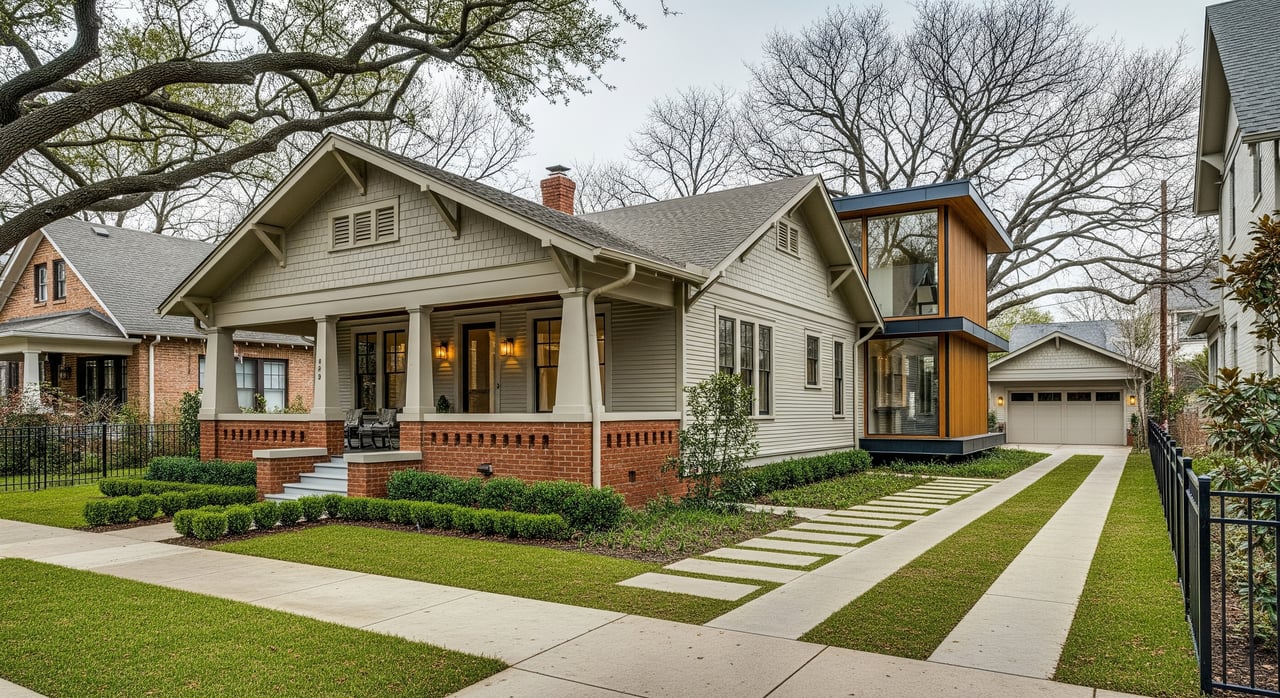
Thinking about pushing out your kitchen, adding a primary suite, or building a garage apartment in Old East Dallas? Two rules shape what is possible on your lot: setbacks and lot coverage. If you understand them up front, you can save weeks of redesign and avoid costly surprises later. This guide explains what these rules mean in Dallas, how they work on older East Dallas lots, how to calculate your buildable area, and what to expect if you need a variance. Let’s dive in.
Setbacks and lot coverage basics
Setbacks are the minimum distances from your property lines where you cannot build. They apply to the front, rear, and sides of your lot and determine where an addition or new structure can sit.
Lot coverage is the portion of your lot that is covered by buildings. It counts the footprints of your house and any accessory structures. It is different from impervious cover, which also includes driveways, patios, pools, and other hardscape that does not absorb water.
In Dallas, these rules live in the Dallas Development Code, often referred to as Chapter 51A. Your property’s zoning district sets its required setbacks, maximum lot coverage, height limits, and other standards. Special districts can modify the base rules, so always check for historic overlays, conservation districts, or Planned Developments that supersede the baseline.
Why these rules matter to your project
- They define your maximum footprint and where you can place additions or new structures.
- They influence whether you need to build up with a second story instead of out.
- They affect whether you need a variance and how long your approvals will take.
- Impervious cover requirements can trigger drainage or stormwater measures even if your building coverage is under the limit.
Old East Dallas specifics
Many Old East Dallas blocks were platted before modern zoning. You often see narrower lots, shallower depths, and homes that are legally nonconforming to today’s rules. That does not mean you cannot improve your home, but enlargements can trigger compliance or the need for a variance.
Historic districts, conservation districts, and occasional Planned Developments are common in older neighborhoods. If your property lies in one, you will need additional design review. That review is separate from zoning and building permits and can influence materials, scale, and placement that are visible from the street.
Recorded plats matter in East Dallas. A plat can establish building lines and easements that differ from standard setbacks. Alleys are another frequent factor. An existing alley can dictate where a garage must go and how far it must be from property lines.
How to confirm your property’s rules
Follow this simple workflow before you start design:
- Look up your zoning. Use the City of Dallas Zoning Map or GIS Viewer to find your zoning district and any overlays.
- Pull the plat and deed. Recorded plats show building lines and easements that can be stricter than zoning.
- Order a current boundary or ALTA survey. You need accurate lot dimensions and easements to place any addition.
- Check for historic or conservation overlays. If present, contact the City’s Office of Historic Preservation to understand the review path.
- Open Chapter 51A. Find the area and bulk table for your zoning district to confirm required setbacks and maximum lot coverage.
- Sketch a simple site plan. Use your survey to outline setbacks, easements, and your proposal. Calculate coverage and impervious area.
- If you exceed limits, evaluate options. Consider redesign, a vertical addition, a variance, or a more complex path such as a replat or PD change with professional help.
How to calculate your buildable area
Start with your survey and use this checklist:
- Confirm lot area from your deed, plat, or survey.
- Determine required front, rear, and side setbacks from your zoning table. For corner lots, confirm which sides count as fronts.
- Compute buildable width: lot width minus the left and right side setbacks.
- Compute buildable depth: lot depth minus the front and rear setbacks.
- Multiply buildable width by buildable depth to get a theoretical maximum rectangle. Real footprints are often smaller due to easements, irregular shapes, and required separations.
- Calculate lot coverage: total building footprints divided by lot area, times 100.
- Estimate impervious cover: building footprints plus driveway, patios, pool surfaces, and other hardscape. Stormwater rules may cap this and can require mitigation.
Common East Dallas constraints
- Narrow side yards limit lateral additions, especially for two-story expansions near a side setback.
- Small rear yards with recorded building lines or utility easements reduce how far you can push back.
- Existing front porches sometimes project into front setbacks. The code can treat porches differently, but rules vary by district and overlay.
- Shared driveways and alley easements shape garage placement and turning radii.
Variances: when and how they work
A variance is relief from a specific zoning standard when strict application causes an undue hardship due to unique property conditions. In Old East Dallas, common variance requests include modest reductions to side-yard setbacks, limited front-yard encroachments for porches, or slight increases to lot coverage for small additions.
What to expect in the variance process:
- Application and fee submission.
- Public notice to adjacent owners and neighborhood contacts.
- City staff review and a written report.
- Hearing before the City of Dallas Board of Adjustment and a decision.
You strengthen your case with a current survey, contextual photos, clear drawings, a written hardship narrative, and supportive neighbor statements. If a variance is denied, your options include redesign or legal appeal, depending on your situation.
Approvals and typical timelines
Your path depends on your property and scope, but most projects follow a similar sequence:
- Zoning confirmation and feasibility: same day to 1–2 weeks.
- Design and documentation by your architect: 2–12 weeks or more, based on complexity.
- Building permit review without variances or historic overlays: typically several weeks, depending on workload and submittal completeness.
- Board of Adjustment variance, if needed: about 6–12 weeks from application to hearing is common.
- Historic review, if applicable: adds weeks to months depending on schedule and whether commission hearings are required.
- Construction: months to a year, based on size and contractor capacity.
The biggest avoidable delay is an incomplete permit package. Plan to submit a full set of drawings, elevations, and a current survey with proposed improvements keyed to the survey.
Design strategies when space is tight
- Build up rather than out. A second-story addition preserves yard area and coverage but verify height limits and fire separation requirements.
- Attach where it helps. Attaching an addition can make better use of setbacks than a detached structure.
- Reconfigure hardscape. Replacing or reducing paving with pervious options can help with impervious cover limits.
- Seek targeted relief. If your lot shape, existing conditions, or a recorded line create a unique hardship, a carefully scoped variance may be practical.
Pitfalls to avoid
- Assuming zoning setbacks are your only limits. Recorded building lines, PUEs, drainage easements, and private restrictions can be stricter.
- Skipping a current survey. Designing to old or approximate dimensions often forces later redesign.
- Confusing lot coverage with impervious cover. You may comply with one and miss the other.
- Overlooking accessory building rules. Separations and setbacks for garages or ADUs can be different from the main house.
- Ignoring tree and landscaping requirements that affect placement and grading.
Who to contact and where to look
For authoritative answers, go to City of Dallas resources by name:
- Dallas Development Code, Chapter 51A for zoning definitions and area and bulk tables.
- City of Dallas Zoning Map or GIS Zoning Viewer for your zoning designation and overlays.
- Development Services, Building Inspection and Permits for plan checklists and submittal procedures.
- Board of Adjustment for variance standards, applications, and meeting schedules.
- Office of Historic Preservation for historic district boundaries and design review procedures.
- Platting and Records for recorded plats, easements, and building lines.
- Stormwater and Floodplain Management for impervious cover and drainage guidance.
County resources also help you confirm parcel dimensions, deeds, and plats. Neighborhood associations or HOAs may have private covenants that are more restrictive than city code.
A practical path forward
If you are planning an East Dallas addition or new build, start with your zoning lookup, plat, and a current survey. Sketch your concept against the setbacks on that survey and run quick coverage and impervious calculations. If you see a squeeze, talk with your architect about vertical options, attached solutions, or a narrowly tailored variance. Build your schedule with enough room for permit review and, if needed, Board of Adjustment or historic review timelines.
When you want a local perspective grounded in historic-home know-how and a clear plan, reach out. Our team regularly coordinates with your architect, surveyor, and builder so you can move from concept to permit with confidence. Connect with Carol Ann Zelley to discuss your property and next steps.
FAQs
What are setbacks and lot coverage in Dallas?
- Setbacks are the minimum distances from property lines where you cannot build, and lot coverage is the share of your lot covered by building footprints. Both are set by your zoning district in Chapter 51A.
How do I find my exact setbacks for Old East Dallas?
- Look up your zoning in the City’s Zoning Map or GIS Viewer, confirm any overlays, then check Chapter 51A’s area and bulk table and your recorded plat for building lines and easements.
My house sits inside today’s setback. Can I still add on?
- Many older homes are legally nonconforming. Repairs are usually allowed, but enlargements often must comply or require a variance. Verify with Development Services and your survey.
Do historic districts change what I can build?
- Yes. Historic overlays require design review and approval, often a Certificate of Appropriateness, which can affect visible materials, scale, and placement even if zoning allows the work.
When is a variance realistic in East Dallas?
- When a unique property condition creates hardship, such as an irregular lot shape or existing constraints. Modest relief for side yards, porches, or small coverage increases is commonly sought.
How long will approvals take for a typical addition?
- Plan for several weeks for permit review, 6–12 weeks more if a variance is needed, and additional time for historic review if applicable. Complex designs or incomplete submittals add time.